Too much dietary sodium
Around the globe, most people consume too much sodium, generally as salt. Excessive sodium increases risks of hypertension and cardiovascular disease, among other ills. For years, health authorities have advised Americans to reduce their salt intake. From 2005-2006, American men and women ate an average of 10.3 and 7.3 grams of salt per day, two to three times the recommended upper amount of 3.7 grams of salt (equivalent to 2,300 mg sodium) per day. In the US, about 70-80 percent of daily salt intake comes from processed foods, such as chips, premade foods, and salted nuts.
Less dietary salt predicts less cardiovascular disease
A team of researchers at the University of California – San Francisco used the Coronary Heart Disease Policy Model to estimate the potential benefits of a population-wide reduction in dietary salt intake of up to 3 grams (1,200 mg sodium) per day. Model results showed that a 3-gram reduction in salt intake predicted a drop in new cases of coronary heart disease from 180,000 to 120,000 annually, stroke from 98,000 to 66,000 annually, heart attack from 153,000 to 99,000 annually, and deaths from 136,000 to 92,000 annually. While all groups of Americans would benefit from dietary salt reduction, Blacks would benefit proportionately more. The estimated reduction in cardiovascular disease compares favorably to reductions caused by less smoking and obesity, and lower cholesterol levels. In addition, reduction in dietary salt intake of 3 grams per day would reduce medical care expenses by an estimated $10 – $24 billion annually. Even a more modest dietary salt reduction of 1 gram per day would reduce medical care expenses and would be more cost-effective than using medications to lower blood pressure. Given that previous efforts to reduce dietary salt intake have been ineffective in the US, reformulating processed foods with lower salt content could lead Americans to consume less sodium and enjoy better health.
Salt substitutes and concern about higher potassium intake
Salt substitutes enriched with potassium relative to sodium (less than 30 percent potassium chloride, at least 70 percent sodium chloride) can reduce sodium intake either through using the salt substitute while preparing and eating food (as in China) or in reformulated processed foods (as in many Western countries). Researchers at Johns Hopkins University reviewed the benefits and risks of potassium-enriched salt substitutes. The main benefit: Salt substitutes can significantly lower systolic and diastolic blood pressure and reduce risks of hypertension and cardiovascular disease. The main adverse effect: Excessive serum potassium levels (called hyperkalemia) can increase risks of death in persons with chronic kidney disease, especially in its advanced stages. In addition, large, sudden increases in serum potassium can cause cardiac arrhythmias and sudden cardiac death. If salt substitute were widely used as a public health measure, persons with chronic kidney disease would need special attention.
Higher levels of potassium intake may not be a problem
Salt substitutes containing potassium and sodium appear to be practical and effective ways to reduce sodium intake. Yet, concerns exist about increased dietary potassium, as noted above. Researchers in Australia and China conducted a large-scale, five-year experimental study with 20,995 Chinese villagers in the Salt Substitute and Stroke Study. Participants had an average of 65.4 years and had a history of stroke or poorly controlled blood pressure. Participants in the salt substitute group were given 20 grams of salt substitute (75 percent sodium chloride and 25 percent potassium chloride) per person per day to be used for cooking and food preservation requirements. Members of the control group were asked to continue their use of regular salt. After an average follow-up of 4.7 years, participants in the salt substitute group had significant 14 and 13 percent fewer new cases of stroke and major cardiovascular events, respectively, compared to the regular salt group. In addition, participants in the salt substitute group died at a 12 percent lower rate death than those in the regular salt group. Systolic blood pressure declined by 3.3 mm Hg more in the salt substitute group than in the regular salt group. Serious events attributable to increased dietary potassium were not significantly different for the salt substitute and regular salt groups. Overall, replacing regular salt with the salt substitute led to reduced risks of stroke, major cardiovascular events, and premature death. Plus, the additional dietary potassium did not increase adverse health outcomes. Of note, the average study participant consumed much more salt than most Americans.
Would salt substitutes save money?
Chinese researchers in the Salt Substitute and Stroke Study also evaluated whether the salt substitute would increase quality of life and save money. Salt substitute cost $1.62 per kg compared to $1.08 per kg for regular salt, thus making salt substitute affordable. Members of the salt substitute group increased their quality of life years by about 8 months. The salt substitute intervention had a 95 percent probability of being cost-saving (that is, saving the medical care system money) and virtually 100 percent probability of being cost-effective (that is, being worth the expense). Replacing regular salt with salt substitute likely saved money for the health care system. If scaled up, low-cost salt substitute could substantially reduce blood pressure and risk of stroke across China and elsewhere.
Benefits and risks of reducing sodium
Intake of sodium in China more than doubles that recommended by the World Health Organization - 4.1 grams per day vs. 2 grams per day. Plus, nearly half of the Chinese population aged 35-75 years has hypertension, which high levels of sodium promotes. Researchers estimated the benefits and risks lowering daily sodium intake with potassium-enriched salt substitutes. This approach is likely to be effective in China, because most of the dietary sodium comes from salt added during food preparation and eating. Nationwide use of salt substitutes would prevent about 461,000 deaths from cardiovascular disease along with 1.3 million non-fatal cardiovascular events annually. On the negative side, nationwide salt substitution would lead to 11,000 additional deaths due to excessive serum potassium (hyperkalaemia) in people with chronic kidney disease. However, even those with chronic kidney disease would receive a net benefit due to reduced risk of cardiovascular disease. On balance, nationwide salt substitution in China would reduce deaths from cardiovascular disease by about 11 percent.
Time to move forward
While the knowledge that high salt intake raises blood pressure has been known for decades, public health measures designed to reduce salt intake are controversial. Most of the salt (that is sodium) in American diets comes from processed foods. As such, we Americans can reduce our salt intake by minimizing intakes of processed foods, especially those with high levels of sodium (as shown in Nutrition Facts labels). A longer-term solution involves the food industry reformulating processed foods to contain less sodium. Reformulation could be accomplished by using a salt substitute to replace all or part of the regular salt. The recent large longitudinal studies, mostly in China, noted above suggest that such substitution would substantially reduce incidence of hypertension, cardiovascular disease, and premature mortality. The main concern of such reformulation arises from the increased potassium intake, which could adversely affect people with chronic kidney disease, especially its advanced stages. Overall, reformulating processed foods in America to include salt substitute and less regular salt would likely provide a major net benefit.
But will we move forward?
Most of the excess salt (actually sodium) that we Americans consume comes from processed and packaged foods. Thus, meaningful reductions of sodium in American diets require a strong public health effort. A recent editorial in JAMA takes the Food and Drug Administration to task for failing to make any progress since 2016 in reducing sodium levels in processed and packaged foods. The authors offer four recommendations: 1) Set more aggressive targets for sodium reduction. 2) Conduct rigorous, timely, and transparent monitoring of results. 3) Transparently engage with the food industry to understand barriers and facilitators to sodium reduction. 4) If voluntary targets are not met, consider setting mandatory sodium reduction targets, as 19 other countries have done. Will the Trump administration pursue these suggestions?
What to do
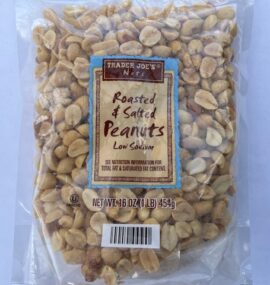
Over the past few years, I’ve reduced my daily salt intake by eating less junk food, training my taste buds to enjoy less salt, and buying low- or no-salt versions of otherwise salty foods. Before buying a packaged product, I check the amount of sodium on the Nutrition Facts label. For example, my wife and I now buy unsalted roasted almonds (0 mg sodium per serving), unsalted dry roasted pecan pieces (0 mg sodium per serving), and low-salt dry roasted peanuts (60 mg per serving, 3 percent of the recommended daily limit). Another route would be to buy salt substitute, such as 75 percent sodium chloride, 25 percent potassium chloride, and do a blind taste test with a food to see if you like it. If so, use it instead of regular salt or mix it 1:1 with regular salt.