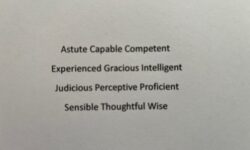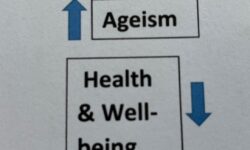
What is ageism?
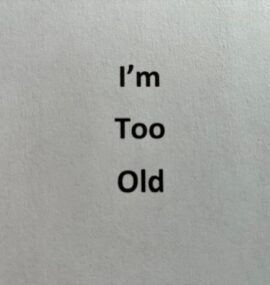
The World Health Organization defines ageism as, “the stereotypes (how we think), prejudice (how we feel) and discrimination (how we act) towards others or oneself based on age.” Thus, some seniors may think that they can’t do something, such as learn a new skill, simply because they think they’re too old.
The global reach of ageism
A recent review evaluated the associations of ageism at both the institutional and individual person levels. A literature search found 422 studies that met the inclusion criteria. Ageism predicted significantly worse health outcomes in 96 percent of the studies and in 74 percent of the associations tested within those studies. Moreover, significant associations occurred for all 45 countries that the studies covered and in all 11 health domains over the 25-year period of the studies. Ageism occurred at both the institutional and individual levels. To top it off, the prevalence of significant findings increased over time. Plus, ageism predicts increased risk of premature death, diminished function health, and slower recovery from illness.
Can ageism be reversed?
The increasing prevalence of ageism globally, the increasing numbers and proportions of seniors, and the links between ageism and worse physical and mental health prompted Sheri Levy to create the PEACE model to help reduce ageism. PEACE is an acronym for Positive Education about Aging and Contact Experiences. It includes two factors that can help reduce the prevalence of aging, namely education about aging and positive contact with older adults. Levy notes the general lack of information about aging across the age spectrum. Plus, positive contact with older adults can help younger persons change their attitudes about aging. Levy identifies five conditions that likely lead to more positive contact. They include 1) individualized interactions, 2) create or promote equal status of contact participants, 3) work toward a common goal, 4) sharing personal information, and 5) sanctioning the contact by authority figures. Thus, providing information about aging, in concert with well-designed contacts with older person role models may help stem the rising tide of ageism.
Contact with vibrant older people
Interventions have been developed to counter ageism, but their effectiveness was not evaluated until recently. Researchers from Canada and the US conducted a systematic review and meta-analysis of 63 published intervention studies. Most of the participants in the interventions were young (mean age of 22 years). The evaluated outcomes included attitudes toward aging, knowledge of aging, comfort with older adults, anxiety about one’s own aging, and working with older adults. Ageism interventions showed a strong, significant effect on attitudes, knowledge, and comfort, but not on anxiety or working with older adults. Interventions that include education and intergenerational contact had the largest effects. Thus, interventions may help reduce younger people to reduce the negative effects of ageism on older persons.
Interventions to counter ageism
One way to develop interventions to counter ageism involves identifying factors that promote ageism. A team of European researchers conducted a systematic review of 199 published articles to identify factors that contributed to three facets of ageism. The facets included cognitive (for example, stereotypes), affective (such as prejudice), and behavioral (for example, discrimination). Analyses revealed 13 ‘other directed’ factors significantly linked to ageism. On the intrapersonal level, higher levels of the behavioral and psychological factors of anxiety regarding aging and fear and/or salience of death were linked to increased ageism. Also on the intrapersonal level, higher levels of the behavioral and psychological factors of conscientious personality, agreeableness personality, extroverted personality, and level of personal collectivism were linked to lower levels of ageism.
On the interpersonal and intergroup level, greater age of the target person and a negative presentation of the target person significantly predicted increased ageism, while the quality of contact with older persons or grandparents and other relatives, and older persons generally predicted significantly decreased ageism. On the institutional and cultural levels, both lower available economic resources and a higher percentage of older persons in a country significantly predicted higher levels of ageism. Of self-directed types of ageism, the only factor that significantly predicted lower levels of ageism was greater physical and mental health. This finding suggests that older people who embrace healthy lifestyle choices are less likely to experience ageism. In addition, this review suggests that interventions to counter ageism could help older people deal effectively with stress to reduce anxiety and to become more conscientious, agreeable, and outgoing.
National-level actions
Becca Levy proposes a different, two-tiered approach to counter ageism. The top-down part would include a White House-level 'aging czar', along the lines of the 'drug czar.' The aging czar would coordinate policy initiatives on the federal level. The bottom-up part would entail building a grassroots social movement, along the lines of the feminist and civil rights movements. Cognitive liberation would be a key aspect of the social movement. People would shift their beliefs and attitudes from accepting ageism-related stigmas to rejecting them. Those of us who are older can take the lead by culling age-related stereotypes from our minds and replacing them with beliefs that support successful ageing. We can (gently) remind others when they use ageist language. Levy’s research highlights the benefits you can enjoy from recognizing the pervasive, negative old-age stereotypes in American culture and taking steps to change your mind about growing older.
Active coping by combat veterans
Would people with negative age-stereotypes develop more mental disorders that people with positive age-stereotypes? Furthermore, could active coping reduce the odds of developing mental disorders? Researchers at Yale used data from about 2,500 US military veterans in the National Health and Resilience in Veterans Study to find out. The veterans had active combat experience, an average age of 58 years, and no mental disorders at baseline. Coping with the vicissitudes of military and civilian life was evaluated according to different coping techniques that the veterans could choose from a list of 14. Over 2 and 4 years of follow-up, veterans with more negative age-stereotypes were more likely than veterans with more positive age-stereotype to develop post-traumatic stress disorder, general anxiety disorder, suicidal ideation, and major depressive disorder. Veterans with positive age-stereotypes who used active coping did not further reduce their odds of developing these four mental disorders. However, veterans with negative age-stereotypes who used active coping significantly reduced the odds of developing the four mental disorders.
What to do
Start by becoming aware of your own negative age stereotypes and those of other people. How you talk to and about yourself matters. Once you recognize your negative age stereotypes, take steps to replace your own negative age stereotypes with more positive age stereotypes.