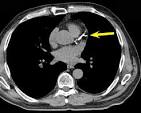
An advantage of show, don't tell
Authors of fiction attempt to engage their audience by showing their characters in action rather than telling about the action. This same advice may help doctors communicate health risks to their patients. Showing patients an image of their clogged coronary artery may motivate them to take medications and embrace healthy lifestyle choices to avoid a heart attack.
Do coronary artery calcium scans motivate patients to exercise more and eat better?
Embracing healthy lifestyle choices reduces the risk of cardiovascular disease. Coronary artery calcium scans detect calcium plaques in coronary arteries. Accurate measures coronary artery atherosclerosis, a leading cause of heart attacks, can be determined from the images. Research in the late 1900s and early 2000s suggested that patients who viewed images of their coronary artery scans were more likely than patients who did not view the images to subsequently engage in better health behaviors. Researchers at the University of California – San Diego continued this line of research using coronary artery calcium scan images for 510 self- or physician-referred patients with an average age of 64 years and with no history of a coronary procedure. All patients viewed their coronary artery calcium scans and discussed them with a physician.
Six years later, patients whose scan scores were more than zero (that is, evidence of calcium plaque in their coronary arteries) were more likely than patients whose scores were zero (no evidence of calcium plaque in their coronary arteries) to begin exercising, to significantly increase their exercise amount, change their diet for the better, and reduce their alcohol intake. Perhaps seeing an image of calcium plaques in their own heart arteries increased patients’ motivation to adopt healthy behaviors so as to reduce their risk of a heart attack.
Do coronary artery calcium scans improve markers of cardiovascular health?
Researchers in Denmark developed a randomized controlled trial to see if patients who had high cholesterol levels and chest pain (and were at higher risk for coronary artery disease) would reduce their total cholesterol levels 6 months after being shown images of coronary artery calcium scans by a nurse. The nurse also discussed healthy lifestyle choices that could reduce risk of a heart attack. Participants included 189 persons with an average age of 61 years who were randomized into two groups. The intervention group included those with coronary artery calcium scores of 70 or greater (top 25 percent). The regular care group included those with those with coronary artery calcium scores of less than 70 (bottom 75 percent). Higher scores predict higher levels of coronary artery blockage by calcium-containing plaques and higher heart attack risk.
After 6 months, the intervention group patients did not show significant improvements in total cholesterol or other health-related measures, including LDL-cholesterol, blood pressure and blood sugar. However, participants in the intervention group who continued their pre-existing statin therapy significantly lowered their blood plasma total cholesterol and marginally reduced their LDL-cholesterol levels. In addition, participants in the intervention group showed lower levels of smoking and healthier diets at 6 months compared to patients in the regular care group. Thus, some combination of viewing images of coronary arterial plaque, current statin therapy, and talking with a nurse about possible ways to avoid a heart attack seemed to motivate patients to adopt healthy lifestyle choices.
What did the science show in 2017?
A 2017 systematic review and meta-analysis of 8 studies showed that patients who had non-zero coronary artery calcium scores (that is, evidence of coronary heart disease) had significantly 2-3-fold higher odds of initiating treatment therapies than patients who had zero coronary artery calcium scores. These therapies included taking aspirin or blood fat lowering medication or blood pressure lowering medication. In addition, patients with non-zero scores were more likely to increase their exercise levels (data from 3 studies) and to eat better diets (data from 2 studies). Finally, patients with non-zero scores were more than twice as likely to persist with lipid-lowering medication but not aspirin and blood pressure medication during follow-up compared to patients with zero scores. Unsurprisingly, motivating patients to start therapies proved easier than motivating patients to stick with the therapies over the long term.
Seeing and doing
A recent review provides additional evidence that patients are more likely to respond positively to images that elicit an emotional reaction rather than to verbal or written information. In particular, a team of international researchers conducted a systematic review and meta-analysis 6 studies that investigated whether images of patients’ coronary artery calcium would motivate patients to ask their physician about blood fat lowering medications (statins) and make healthy lifestyle changes. The studies (7,083 patients) had varying designs but revealed that patients who were shown images of their coronary artery calcium reduced their 10-year Framingham cardiovascular disease risk score by 0.91 percentage points compared to the control groups. In addition, patients shown their coronary artery calcium imagery significantly lowered their total cholesterol, LDL-cholesterol, triglycerides, and systolic blood pressure, while fasting blood glucose rose slightly, compared to patients in the control groups.
More evidence that seeing motivates doing
A 2024 systematic review and meta-analysis of 29 studies generally supported previous studies, namely that patients with diseased coronary arteries (coronary calcium scores more than zero) were more than twice as likely to initiate lipid-lowering, antihypertensive, and antiplatelet medications than patients without diseased coronary arteries (coronary calcium scores of zero). When patients with scores more than zero were categorized as low, moderate, or high risk, patients in the moderate and high risk groups had even greater odds of initiating lipid-lowering medication (such as a statin) compared to patients in the low-risk group. Compared to patients who did not have access to coronary artery scanning images, patients who had access were 4 times more likely to initiate lipid-lowering medication. Patients with diseased coronary arteries were significantly more likely to continue lipid-lowering medications, but not anti-hypertensive medications, during follow-up compared to patients without diseased coronary arteries. Thus, patients who were informed that they have diseased coronary arteries and who could see the CAC imagery appeared to be much more motivated to begin treatment. Unfortunately, motivation to continue treatment seemed to wane as time passed.
What to do
If you have had a coronary artery calcium scan that shows coronary artery disease, I suggest that you ask your medical care provider to show you the image and for both of you to discuss what it means for you. You might find yourself to be more motivated to take any recommended medications and adopt healthy lifestyle choices. If so, pick one lifestyle choice and find practical ways to incorporate that choice in your everyday life.